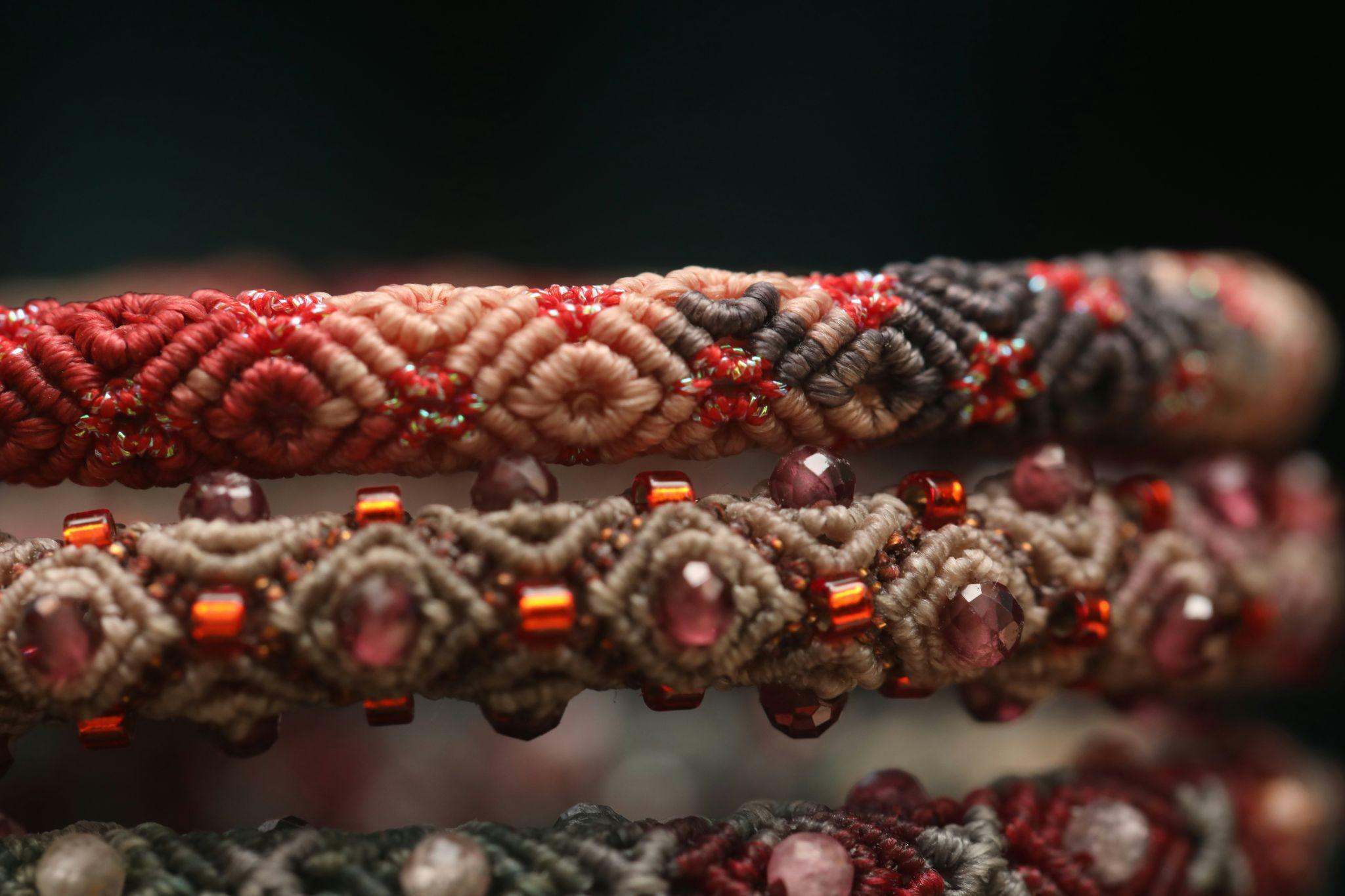
In a world where fashion has never been more accessible or more identical, a growing number of style-conscious consumers are turning to independent designers for something the global market simply cannot manufacture: genuine originality.
There is a particular feeling that comes from wearing a piece of jewellery you found rather than one that found you through an algorithm. It sits differently. It starts conversations. It carries a small but unmistakable weight of intention, both yours and the maker’s, that mass production cannot replicate no matter how sophisticated the finish.
That feeling, hard to name precisely but instantly recognizable, is driving one of the most interesting quiet shifts in contemporary style culture. After decades of fast fashion, global retail homogenization, and the flattening effect of trend cycles accelerated by social media, a meaningful number of people are making a deliberate turn toward the handmade. Toward the local. Toward the kind of jewellery that could only have come from a specific person, working in a specific place, with a specific sensibility they have spent years developing.
It is not a trend. It is a correction.
When Everything Looks the Same
The paradox of modern fashion is that we have never had more choice and never felt less individual. Every major platform surfaces the same pieces to millions of people simultaneously. The viral necklace that felt like a discovery when you first saw it arrives at the door of a hundred thousand other people that same week. The algorithm that introduced you to it has introduced everyone like you to it.
This has produced a particular kind of style fatigue. Not fatigue with style itself, but with the experience of wearing something that announces nothing except your willingness to follow the same current as everyone else. The pieces that feel genuinely personal have become rarer and therefore more precious. And the places to find them have narrowed to those operating outside the machinery of trend production entirely.
Independent jewellery designers occupy exactly that space. They are not responding to trend reports or optimizing for mass appeal. They are making things that interest them, that reflect their particular vision of beauty, material, and form. The result is jewellery that looks like a point of view rather than a product.
The Craft Underneath the Aesthetic
What distinguishes handmade jewellery from its mass-produced counterpart is not simply visual. It is structural, in both the literal and figurative sense.
A goldsmith working by hand makes hundreds of micro-decisions that a factory line never confronts. The curve of a bezel. The depth of a texture. The exact placement of a stone within a setting that changes how light moves through it depending on the angle of the wearer’s hand. These decisions accumulate into an object that holds the trace of its maker in ways that are nearly impossible to replicate at volume.
This is why two pieces that look similar in a photograph can feel entirely different in your hand. The handmade version has a specificity, a quality of having been attended to, that the manufactured version lacks. Collectors and longtime jewellery wearers often describe it as a sense of presence. The object feels like it came from somewhere and someone, rather than from a process.
That presence is what makes handmade jewellery genuinely wearable as personal expression rather than costume. When what you wear is connected to a maker’s individual creative intelligence, it reflects something of your own in choosing it.
Local Design as a Form of Connoisseurship
There is a growing sophistication among jewellery buyers that mirrors what happened in wine, food, and furniture over the past two decades. Provenance matters. Process matters. Knowing where something came from and who made it has become part of what makes it worth having.
In Toronto, this conversation has a vivid focal point in the Parkdale neighbourhood, where Made You Look has spent years building a destination that functions as both retail studio and creative community. Representing handmade jewellery from local designers working across an extraordinary range of styles and materials, the studio offers something genuinely rare in contemporary retail: a curated encounter with more than a hundred individual creative perspectives, all under one roof.
The range is striking. Classic fine goldsmithing sits alongside bold enamel work, nature-inspired organic forms, geometric precision, vintage-inflected romanticism, and pieces that defy easy categorization entirely. What unites them is not aesthetic uniformity but a shared commitment to intentional making. Each designer has a voice. Each piece is the result of that voice being applied to material with skill and care.
For someone serious about personal style, this is the kind of environment that rewards time. The experience of moving through a collection that diverse, where each piece carries the particular sensibility of its maker, is fundamentally different from browsing a display of interchangeable options. You are not selecting from variations on a theme. You are discovering perspectives.
Material Choices That Mean Something
One of the most interesting dimensions of the independent jewellery world right now is the conversation around materials, which has become considerably more nuanced than the traditional hierarchy of precious metals and stones once suggested.
Salt and pepper diamonds, with their included, clouded, deeply individual character, have moved from curiosity to genuine covetability among buyers who understand that a perfectly flawless stone and a stone with a story are not competing on the same terms. Moissanite, once positioned purely as a budget alternative to diamond, is now being chosen for its own sake by buyers who appreciate its brilliance and its reduced environmental footprint. Sapphires in every colour of the spectrum, from the near-colourless to vivid teal to deep purple, have displaced the classic round colourless diamond as the stone of choice for buyers who want something that feels genuinely theirs.
Beyond stones, the material vocabulary of independent jewellers spans enamel, resin, wood, ceramic, textile, and combinations that produce objects you would not expect jewellery to be made from until you see them and suddenly cannot imagine why they would be made from anything else. The willingness to work outside established hierarchies is one of the defining pleasures of the independent design world.
The Ethics Dimension
Style and ethics are not always comfortable bedfellows, but the growth of interest in independent and locally made jewellery is inseparable from a broader shift in how conscious consumers think about what they buy and where it comes from.
The supply chains of large-scale jewellery retail are often opaque in ways that smaller independent operations are not. When you buy a piece from an independent designer who sources their own materials and makes everything in their studio, you have a relatively clear picture of where the object came from. When you buy from a chain retailer, that picture is considerably harder to obtain.
This is not a polemic against mainstream retail. It is an observation that for buyers who care about the ethics of their consumption, independent and locally made jewellery offers a transparency that is simply structurally unavailable in mass-produced alternatives. The maker is available to talk to. The process is not hidden behind layers of corporate communication. The piece you are holding is the direct result of a person’s labour, not the output of a system designed to obscure that labour entirely.
Wearing Something Irreplaceable
There is a final dimension to the appeal of handmade jewellery that resists analytical framing but deserves to be named: the irreplaceability of the one-of-a-kind.
Much of what we wear is replaceable. If you lose a mass-produced piece or it wears out, you buy another. The relationship between owner and object is provisional, interchangeable. But a handmade piece, particularly one made by an individual designer in a small run or as a single original, carries a different status. It cannot be replaced because nothing exactly like it exists anywhere else. You are not wearing a unit from a line. You are wearing a specific object made by a specific person at a specific moment in their creative development.
That irreplaceability is not just sentimental value, though it carries that too. It is the quality that turns a piece of jewellery from an accessory into an heirloom. From something you wear to something that over time becomes part of how people remember you, and how you remember yourself.
In a culture that has optimized relentlessly for the replaceable, that quality has become quietly extraordinary. And the independent designers making those irreplaceable pieces are, quietly, some of the most important creative voices in contemporary style.
Splash Magazines Worldwide celebrates the makers, places, and perspectives shaping a more beautiful and conscious world.