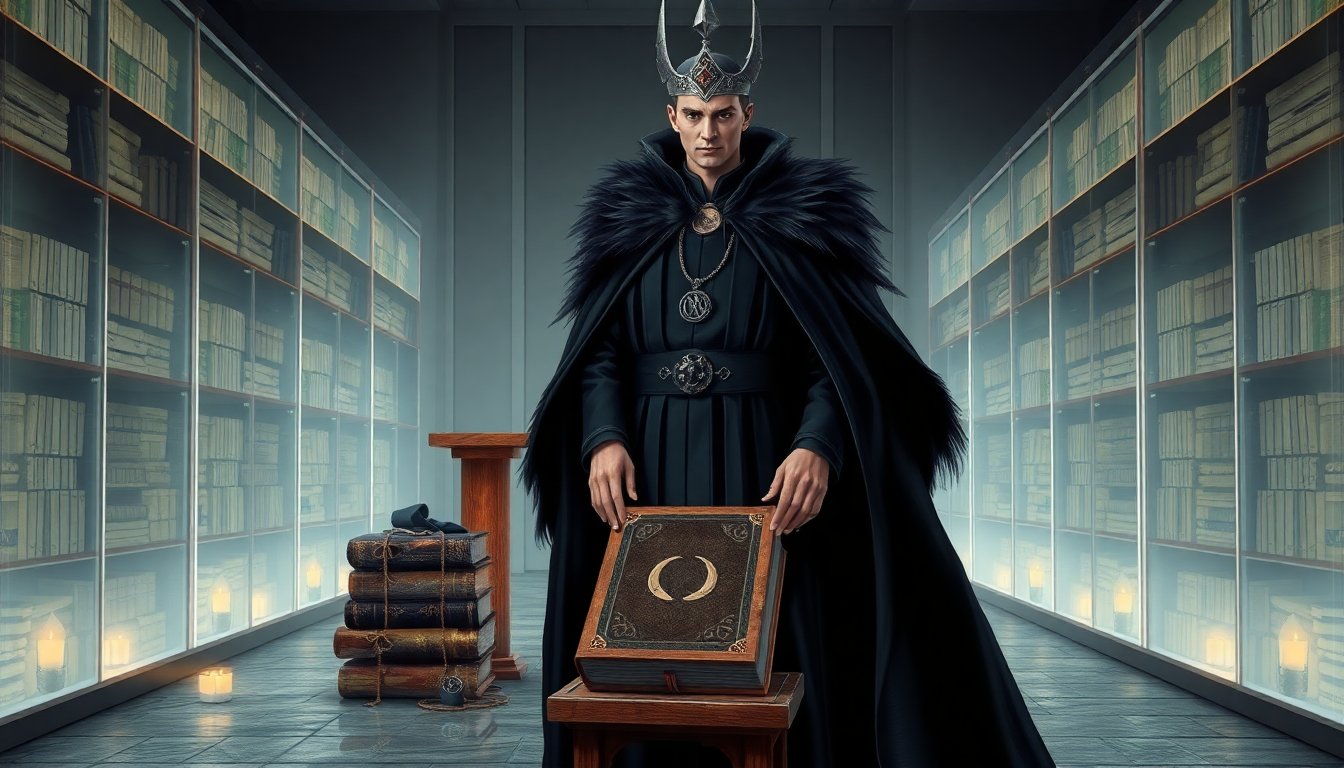
Xyrandral Qelanthor appears as a shadowbound archon in many modern campaigns. The figure combines fallen-angel motifs and night-magic rules. Readers will learn his origin, core powers, and practical story uses. The guide will stay concise and factual. Each section will present clear descriptors and actionable plot hooks.
Key Takeaways
- Xyrandral Qelanthor is a shadowbound archon who wields night-magic and broken oaths, making him a versatile patron or antagonist in fantasy campaigns.
- He originated from a celestial archive guardian who turned against corrupt orders, embodying themes of justice versus law and the cost of silence.
- His powers include manipulating shadows, binding oaths with visible marks, and erasing memories, but he is weakened by sunlight and absolute truth.
- His combat style favors misdirection, runebinding, and nonlethal tactics, often controlling the battlefield through strategic use of runes and sworn allies.
- Xyrandral’s ambiguous morality and complex alliances with secret societies and enemies like inquisitors make him a dynamic character for storytelling and role-playing scenarios.
- Game masters can leverage his story hooks, such as cursed towns or moral bargains, to challenge players’ values and escalate narrative stakes.
Who Is Xyrandral Qelanthor? A Concise Profile
Xyrandral Qelanthor stands as a crowned exile who commands shadow and oath. He began as an archon charged with guarding a celestial archive. He broke his oath after witnessing mortal cruelty. He bound himself to night-magic to punish corrupt orders. He now moves between courts, offering bargains and warnings. Game masters will use him as a patron, antagonist, or ambiguous guide. Players will recognize him by his soft voice, long cloak, and law-twisted moral code. Scholars in setting lore debate whether he seeks justice or power.
Origins And Mythos: Birth, Key Events, And Cultural Influences
Xyrandral Qelanthor rose during the Archive Purge, a year when knowledge burned. He first appeared as a guardian angel formed from written vows. He abandoned the archive after his ward was executed by civic rulers. He then crafted the Shadow Compact, a set of night oaths that grant power for silence. His myth spread through ballads and forbidden texts. Different cultures altered his image: coastal cities call him a grim avenger, inland clergy name him a warning spirit. Cultists and playwrights both adapted his story to fit local morals.
Powers, Weaknesses, And Signature Abilities
Xyrandral Qelanthor channels shadow as a resource and a weapon. He converts secrecy into force and uses oaths to shape fate. He can erase short memories and bind promises with visible marks. He resists direct light and divine domain spells. He loses power when people openly confess or when sunlight strikes his sigils. He fears absolute truth and relics that force revelation. Storytellers can use these limits to create tension and to give players tools to challenge him.
Shadowcraft, Runebinding, And Combat Style
Xyrandral Qelanthor uses shadowcraft to create screens and tendrils that hold foes. He carves runes into surfaces to anchor vows and spells. He prefers nonlethal crippling over outright slaughter. He employs misdirection and traps in battle. He favors quick strikes that force enemies to make hard choices. He uses runes to shift battlefield rules, such as silencing spells or reversing movement. He seldom fights without a contingency sealed by a rune or a sworn ally.
Appearance, Symbols, And Visual Motifs
Xyrandral Qelanthor appears as a tall figure wrapped in ink-dark cloth. He wears a silver coronet that looks broken at one side. His eyes glow like candle embers. He bears a chest rune that pulses when oaths break. His common symbol shows a closed book pierced by a crescent blade. Artists often render him with feathered shadows instead of wings. Temples or shrines use black cloth, tied knots, and candles to honor or fear him.
Role In Stories: Plot Hooks, Themes, And Narrative Functions
Xyrandral Qelanthor serves many story needs. He can bind a town with a secret curse that players must undo. He can offer a bargain that forces moral trade-offs. He can act as a hidden ally who betrays at a key moment. Themes that suit him include justice versus law, the cost of silence, and the danger of hidden knowledge. Plots often revolve around broken promises, revealed lies, or a public oath that must stand. Authors can use him to test character values and to escalate stakes.
Allies, Enemies, And Moral Ambiguity
Xyrandral Qelanthor allies with secret societies, oathbound knights, and record-keepers who value discretion. He opposes inquisitors, truth-seeking cults, and sun-priests who expose lies. His allies help him bind deals and enforce runes. His enemies try to force him into light and confession. He acts with moral ambiguity: he punishes cruelty but also enacts harsh reprisals. Writers should present his motives clearly and then place him in scenes that force choices. This method makes him compelling and usable across genres.