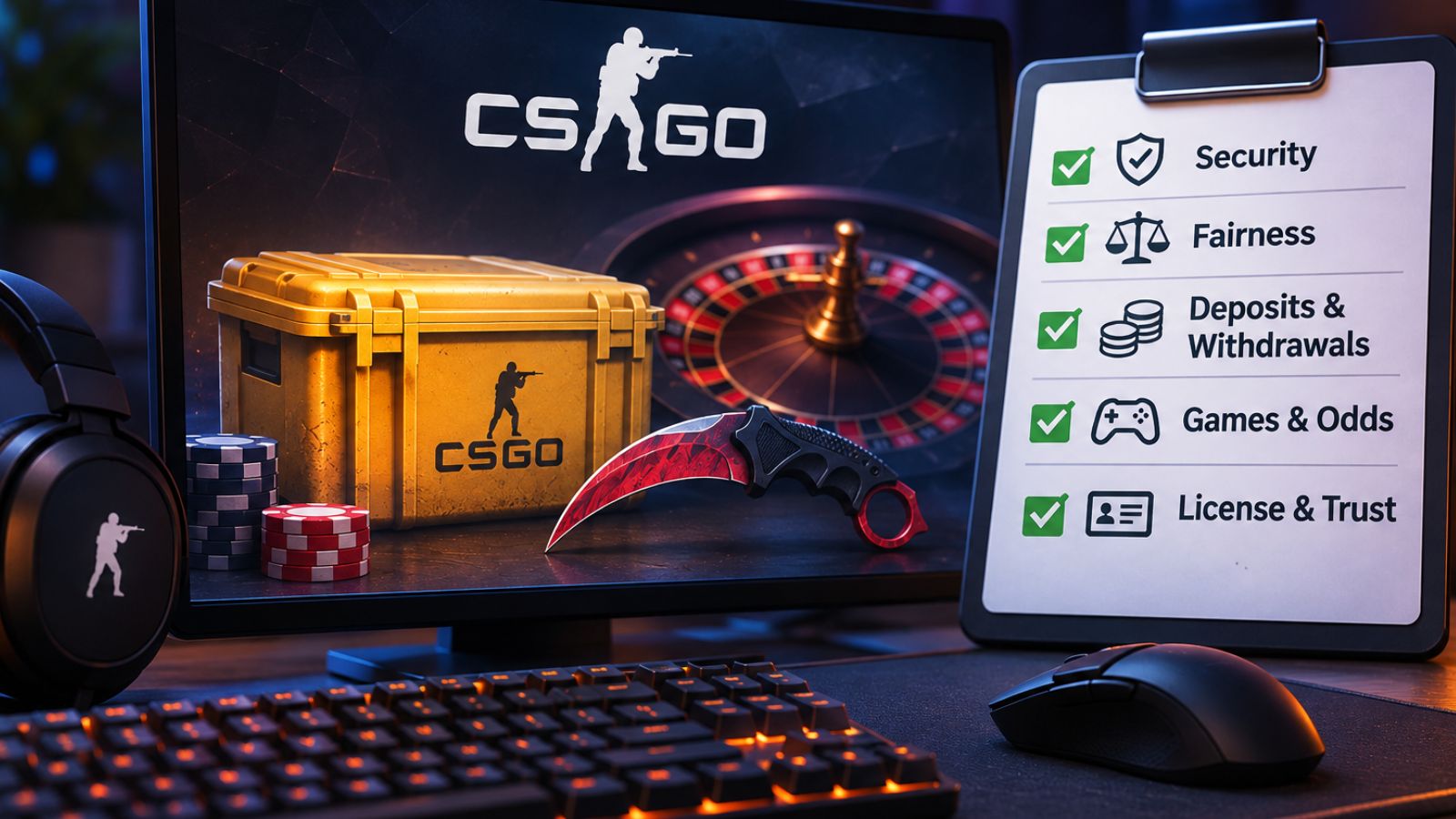
Choosing between the best csgo gambling sites requires more than comparing available games or welcome bonuses. Counter-Strike 2 skins have real market value, and third-party gambling platforms handle these items differently. Some support direct skin deposits, while others use virtual balances or cryptocurrency payments. Before using any platform in 2026, players should understand how item prices are calculated, what happens during withdrawals, and whether the operator provides reliable information about its games and security.
How CSGO Gambling Platforms Handle Player Inventories
Skin-based gambling platforms connect their services to the Counter-Strike item economy. Depending on the operator, users may deposit eligible skins, exchange items for platform credit, or use other supported payment methods.
Not every platform accepts the same items. Some restrict deposits based on minimum value, item availability, or trading limitations.
For example, a common AK-47 skin may be accepted immediately, while a rare knife with an unusual pattern could require additional valuation or might not be supported.
Players should check whether deposited items remain recoverable or are permanently exchanged for platform balance.
Understanding Skin Prices and Deposit Values
The value assigned to a skin is not necessarily identical to its price on the Steam Community Market.
Third-party platforms may calculate deposits using external market prices, internal pricing systems, or their own trading margins.
Wear condition, float value, StatTrak status, and rare patterns can influence an item’s market price.
A Factory New skin may be worth considerably more than the same weapon finish in Battle-Scarred condition.
Before accepting a deposit offer, compare the platform’s valuation with recent prices from established skin marketplaces.
Security and Account Protection
Account security is especially important when valuable Counter-Strike inventories are involved.
Players should check whether a platform supports two-factor authentication, secure login procedures, and notifications about unusual account activity.
Steam authentication can simplify account access, but users must verify that they are signing in through the legitimate Steam login system.
Fake login pages and impersonated trading services can expose account credentials or lead to unauthorized trades.
Checking Trade Offers and Bot Accounts
Some platforms use automated trading accounts to process skin deposits and withdrawals.
Before confirming a Steam trade, users should inspect the receiving account and verify that the offered items match the expected transaction.
An unexpected trade request, a changed recipient, or an unfamiliar confirmation should be treated as a warning.
Players should also avoid sharing Steam Guard codes, recovery information, or account credentials with third-party services.
Game Fairness and Result Verification
Different CSGO gambling platforms offer different game formats. These may include roulette-style games, coin flips, jackpots, or case-opening simulations.
Each format has its own rules, payout structure, and potential house advantage.
A game offering large rewards does not necessarily provide favorable odds. Players should look for clear explanations of winning probabilities and how payouts are calculated.
Some platforms use Provably Fair systems, which allow users to verify certain game outcomes through cryptographic data.
However, this feature does not prove that the operator is financially reliable or that withdrawals will be processed correctly.
Withdrawal Rules and Trading Restrictions
Withdrawal conditions can make a significant difference when comparing platforms.
Some operators allow users to withdraw available skins, while others offer cryptocurrency or alternative payment methods.
Minimum withdrawal amounts, processing times, and service fees should be visible before depositing.
A platform may also have limited inventory, meaning a particular skin is unavailable even when the user’s balance is sufficient.
Steam Trading Limitations
Steam trading rules can affect how quickly items move between accounts.
Certain Counter-Strike items may be subject to trade restrictions following acquisition or other inventory actions.
These restrictions can prevent immediate transfers, regardless of how quickly a gambling platform processes its internal requests.
Players should distinguish between delays caused by Steam’s trading system and delays imposed by the operator.
Licensing and Platform Transparency
A professional-looking website is not proof that a gambling service operates legally.
Players should check the operator’s legal identity, licensing information, and permitted jurisdictions.
The availability of a gambling website does not automatically mean that using it is legal in every country.
Terms and conditions should explain age restrictions, account verification, prohibited activities, and dispute procedures.
Independent reviews may provide additional context, but promotional rankings and affiliate recommendations should not replace direct verification.
What Matters Most Before Using a Platform
The most useful comparison starts with the details that affect a player’s actual inventory and funds.
Check the value offered for deposits, the available withdrawal methods, and whether the platform clearly explains its fees. Review account security settings and verify that trading procedures do not require unnecessary access to Steam credentials.
It is also important to confirm that the operator is legally authorized to serve the player’s jurisdiction and provides responsible gambling tools, including deposit limits and self-exclusion.
Players should avoid depositing valuable skins simply to test an unfamiliar service. When pricing, licensing, or withdrawal conditions cannot be verified, keeping items in a personal inventory is the safer choice.