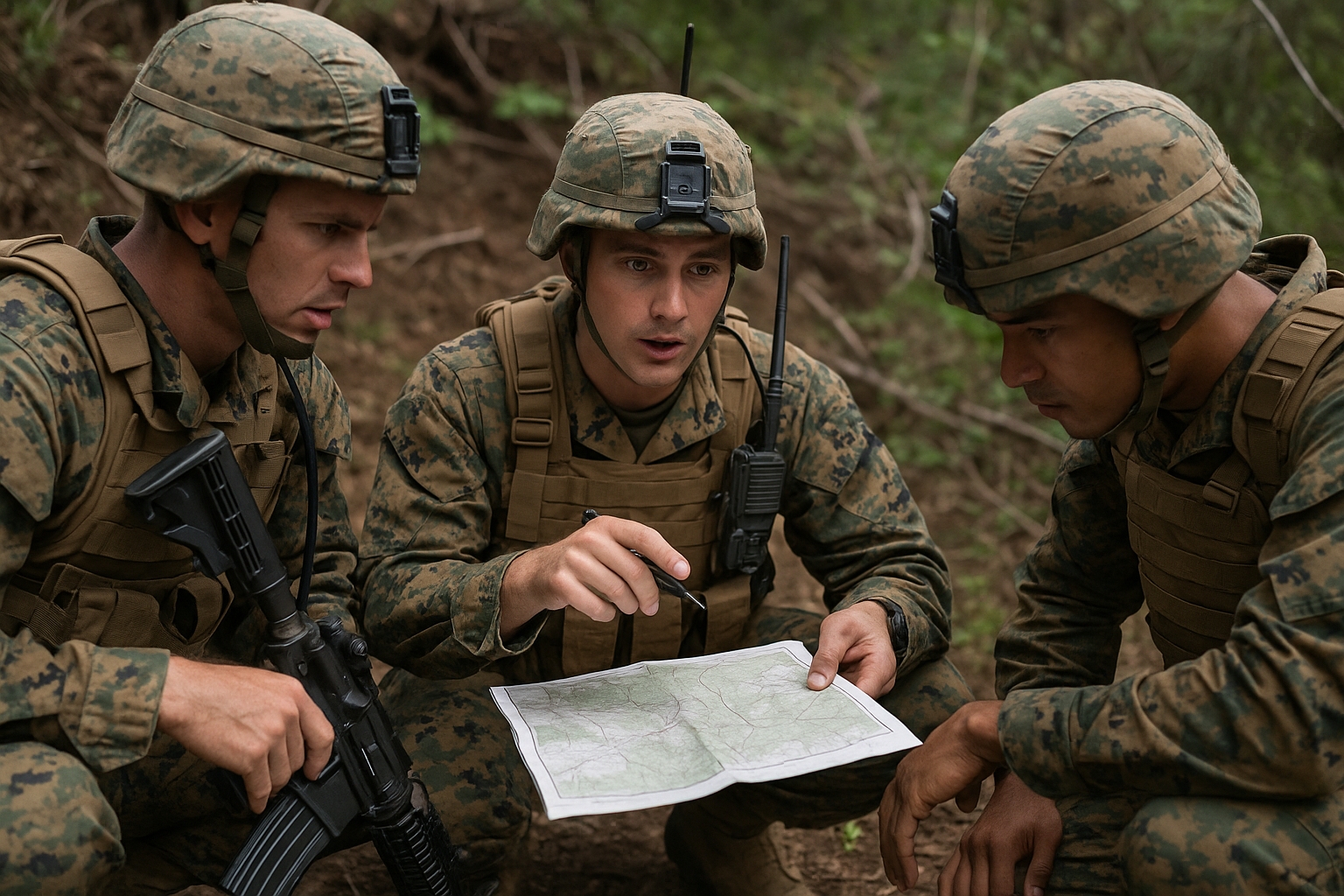
thelowdownunder tests marines ability think critically in field-like conditions. The exercise forces Marines to evaluate information, set priorities, and act under pressure. Commanders designed the event to reveal reasoning gaps and decision habits. Observers record choices and outcomes. Units then use the data to improve training and tactics.
Key Takeaways
- The Lowdown Under exercise challenges Marines to think critically under pressure by simulating complex, realistic mission scenarios.
- This multi-phase exercise measures critical thinking through decision points, risk assessment, ethical choices, and communication effectiveness to identify reasoning gaps.
- By exposing Marines to layered problems and shifting objectives, the exercise improves their ability to evaluate information and adjust tactics rapidly.
- The use of detailed performance data helps tailor individual training and influences leadership development and promotion decisions.
- Feedback from the Lowdown Under has led to improved questioning habits, enhanced briefing protocols, and updated training modules focusing on bias and alternative solutions.
- Critical thinking in the Lowdown Under directly links to mission success by promoting adaptable judgment over rote responses in modern operational environments.
What Is The Lowdown Under? An Overview Of The Exercise And Objectives
The Lowdown Under is a multi-day exercise. It places Marines in layered problems that mirror modern missions. Organizers create scenarios that mix limited information, civilian factors, and shifting goals. The exercise aims to test judgment, information handling, and ethical choices. Planners state clear objectives: find flawed reasoning, measure response patterns, and recommend training changes. The exercise runs at company to battalion scale. Staff rotate roles to expose leaders to different decision demands. The Lowdown Under blends simulation, live drills, and data capture.
Why Critical Thinking Is Mission-Critical For Modern Marines
Modern operations present fog and rapid change. Marines must spot false assumptions and adjust plans. Commanders expect junior leaders to weigh trade-offs quickly. Poor reasoning leads to mission failure and harm. Training that targets thinking helps units adapt and save lives. The Lowdown Under highlights thinking over rote drills. It shows where doctrine fits and where leaders must improvise. The exercise hence links individual judgment to unit success.
How The Lowdown Under Is Structured: Phases And Flow
Organizers break the exercise into clear phases. Each phase adds complexity and stress. Marines face initial briefings, fragmented updates, and surprise events. Observers inject political, civilian, or technical twists. Each phase ends with a short review. The flow forces teams to refine tactics and thought habits. Timed transitions test how quickly teams change course. The structure so emphasizes iterative learning and measured risk.
Key Assessment Metrics: How Performance And Thought Processes Are Measured
Assessors use both quantitative and qualitative metrics. They count decision points, information checks, and confirmations. They score option generation, risk assessment, and ethical consideration. Observers log bias signs such as confirmation or groupthink. Planners also measure time to decision and error rates. Evaluators grade communication clarity and task delegation. The data feed a performance profile for each leader. Profiles then guide individualized training and promotion decisions.
Lessons And Real-World Outcomes: Participant Feedback And Unit-Level Changes
Participants report clearer habits after the Lowdown Under. Marines say they ask better questions and verify sources more often. Commanders note faster course corrections in follow-on training. Units change standard briefs to include explicit assumptions and risk statements. Training pipelines add modules on bias and alternative generation. Some units adjust leader delegation to match proven strengths. The exercise so produces concrete changes in both behavior and doctrine.