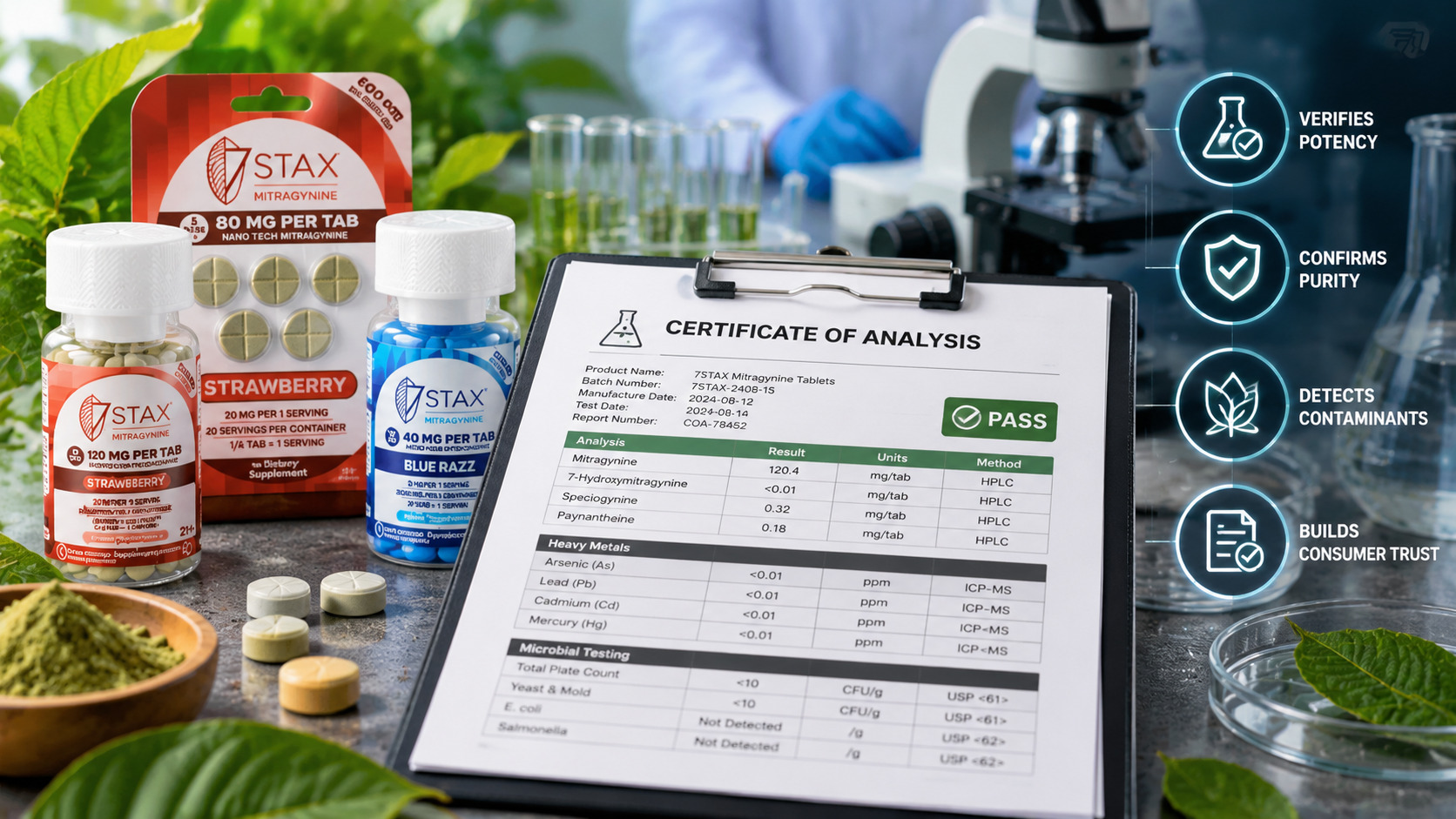
The alkaloid product market operates in a space where oversight is uneven and product quality can vary widely from one brand to the next. In that environment, third party lab testing is the closest thing buyers have to a reliable standard. It is the mechanism that separates products backed by evidence from products backed only by claims. This article explains what third party testing is, why it matters so much in this particular market, and how to use it when choosing a product.
What "Third Party" Really Means
Testing can be done in different ways, and the distinction between them is significant. In house testing is performed by the manufacturer itself. Third party testing is performed by an independent laboratory that has no financial stake in selling the product. The difference is one of incentive. A company testing its own product has a reason to present favorable results. An independent lab does not.
This is why the phrase "third party tested" carries weight. It signals that the numbers on a product page have been checked by an outside party whose job is accuracy, not marketing. When a brand publishes independent testing for its 7-hydroxymitragynine tablets for sale, it is inviting scrutiny rather than avoiding it, and that willingness is itself a meaningful signal.
Why the Alkaloid Market Needs It
Several features of this market make independent testing especially important.
The first is natural variability. Alkaloid content in plant material changes with growing conditions, harvest timing, and processing. Two batches from the same source can differ. Without testing, there is no way to know what any given batch actually contains.
The second is the relationship between alkaloids. As mitragynine oxidizes, it can convert into 7-hydroxymitragynine, so the ratio between the two can shift during production and storage. Only a laboratory analysis can confirm the true composition of a finished product.
The third is the risk of contamination. Plant material can carry heavy metals absorbed from soil, and it can develop microbial growth if handled or stored poorly. These are not things a buyer can see, smell, or taste. Laboratory testing is the only way to detect them.
The fourth is inconsistent labeling across the industry. Because standards are not uniform, some products are labeled accurately and others are not. Independent testing is what allows a buyer to tell the difference rather than assuming every label is honest.
What Testing Actually Checks
A comprehensive testing program covers more than a single number. Alkaloid content is the headline figure, confirming how much mitragynine or 7-hydroxymitragynine a product contains and whether that matches the label.
Beyond that, contaminant screening looks for heavy metals such as lead, arsenic, cadmium, and mercury. Microbial testing checks for harmful bacteria, yeast, and mold. In products made through extraction, residual solvent testing confirms that processing chemicals were removed. Together, these checks address both what a product is supposed to contain and what it is not supposed to contain.
A brand that tests only for alkaloid content is telling a partial story. A brand that also screens for contaminants is addressing safety, not just potency.
How Testing Protects the Buyer
The practical value of third party testing comes down to protection and confidence.
It protects against inaccurate labeling by verifying that stated figures are real. It protects against contamination by catching problems that are invisible to the naked eye. It protects against inconsistency by confirming that a specific batch meets expectations rather than trusting that all batches are alike. And it gives buyers a basis for comparison, because two products with published, independent testing can be evaluated side by side on their actual specifications.
Without testing, every one of these judgments becomes guesswork. A buyer choosing 7Stax Kratom or any other alkaloid product with independent lab results behind it is working from evidence. A buyer choosing an untested product is working from hope.
Accreditation Adds Another Layer
Not all laboratories are equal. A lab accredited to a recognized standard, such as ISO 17025, has demonstrated that its methods and equipment meet an external benchmark for accuracy. When a test report names an accredited laboratory, it strengthens the value of the results, because the testing itself has been held to a documented standard rather than resting on the lab's own word. Accreditation will not always be listed, but when it is, it is a detail worth noting, since it raises the bar on the reliability of every figure in the report.
The Difference Between Marketing and Verification
It is worth drawing a clear line between claims and proof. Marketing language describes what a brand wants you to believe. Verification shows what an independent party actually measured. A product can be marketed as pure, potent, and premium without any of those words being verified.
Third party testing is the bridge between the two. It takes a marketing claim and either supports it with data or exposes the gap. This is why the presence or absence of independent testing is often the most telling thing about a brand. Companies confident in their products tend to publish their results. Companies that avoid testing, or make it hard to find, are choosing to keep the buyer in the dark.
How to Use Testing When You Shop
Turning this into action is straightforward. Look for products that state clearly that they are third party tested. Find the actual test documents rather than accepting the claim at face value, since some brands say "tested" without showing anything. Check that the laboratory is named and, ideally, accredited. Confirm that the testing covers contaminants and not only alkaloid content. And make sure the results correspond to the batch you are buying.
If a brand meets those conditions, you have real grounds for confidence. If it cannot, that absence tells you something important, regardless of how polished the rest of the presentation looks.
The Bottom Line
In a market defined by natural variability, shifting alkaloid ratios, contamination risk, and uneven labeling, third party lab testing is the foundation of trust. It converts claims into evidence and gives buyers a way to compare products on facts rather than promises. The single most useful habit you can build in this market is to look for independent testing first, verify that it is complete and current, and treat its absence as a reason for caution. Evidence, not marketing, is what should guide the decision.